






Peri/Meno BioType™: Hormone-Sensitive Bundle
Why you're here
“Hormone-Sensitive” means you've always felt your hormones. Menstrual cycles that were hard work. PMS that was challenging. Unaccountable mood swings. Maybe heavy or unpredictable periods in your 30s. And now hot flashes, night sweats, and sleepless nights.
Here's what that pattern actually means, and it's not what most women are told.
Everyone's estrogen falls in peri/menopause. Yours isn't falling further or faster than anyone else's. What's different is how much your body reacts to the change — and that high reactivity has been yours a long time. The woman who had difficult cycles at 25 is often the woman having a difficult time at 49. It's the same sensitivity, showing up at a different stage.
Estrogen doesn't simply decline in peri/menopause, either. It swings. Ovulation becomes irregular, progesterone falls away first, and estrogen surges unopposed before dropping. If you've noticed things got worse before they got predictable, that's why. A system that reacts strongly to hormonal signals has a lot more signal to react to.
Which means the useful question isn't how to replace what's falling. It's how to steady what's reacting.
What's in the bundle – and the science behind it
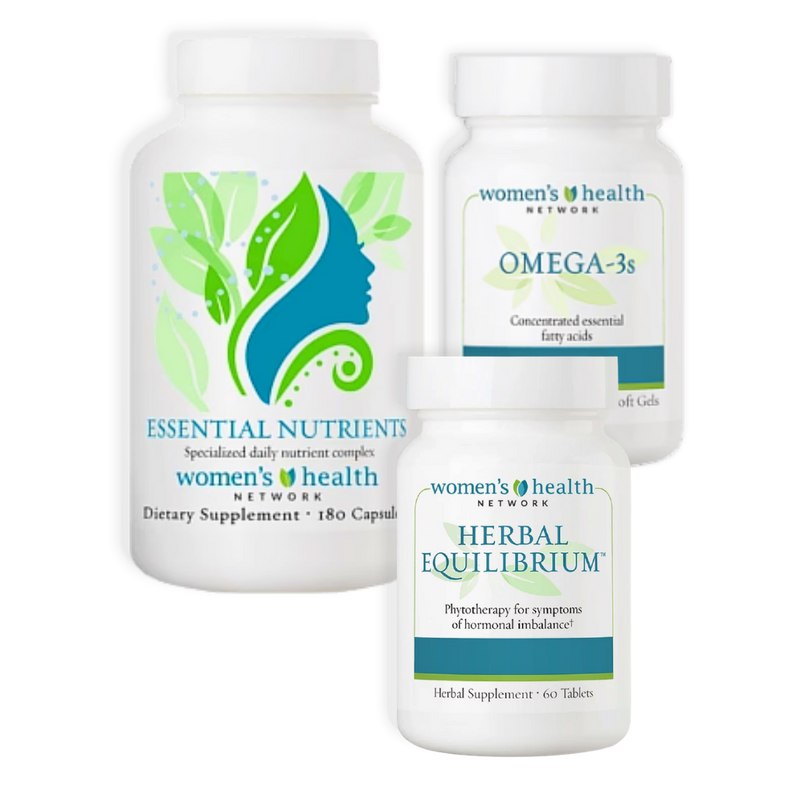
Herbal Equilibrium™
The targeted part
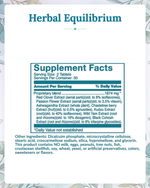
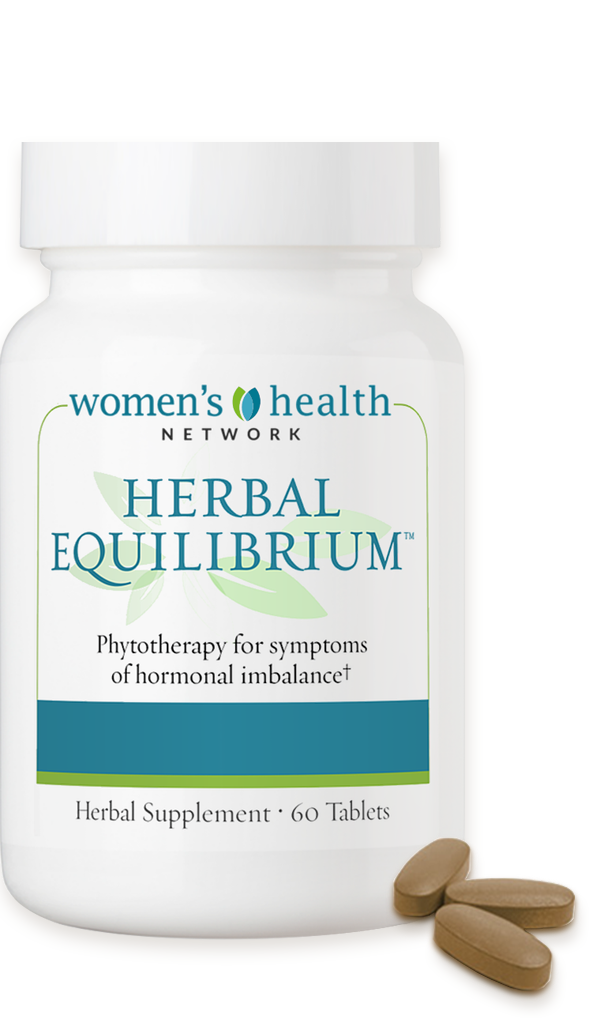
Seven botanicals, chosen because they act on different parts of the same system rather than all pushing in one direction.
Kudzu and red clover both supply isoflavones — plant compounds structurally similar enough to estrogen to interact with estrogen receptors, but far weaker than the hormone itself. That weakness is the point. They don't add estrogen; they occupy receptors gently, which can smooth the difference between a surge and a drop.
Where they bind matters too. Your body has two main types of estrogen receptor. ER-beta is concentrated in the brain, bones and blood vessels. ER-alpha is concentrated in breast and uterine tissue. The two main isoflavones here, genistein and daidzein, preferentially bind ER-beta — which is why isoflavones can act on hot flashes without behaving like estrogen in breast tissue.
Kudzu is standardized to 40% isoflavones and red clover to 8%, so the two together deliver more of the same compounds — daidzein and genistein — than either would alone. It's the total that matters, not either ingredient on its own.
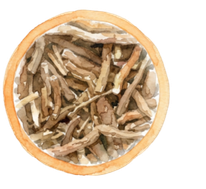
Black cohosh is often assumed to work the same way. Actually, it doesn't, and that makes it complementary. It doesn't bind estrogen receptors at all — its effect on hot flashes appears to run through serotonin and dopamine signalling in the brain, the system that sets your internal thermostat. That makes it a second, independent route to the same over-signaling, which matters in your body’s complex biochemistry.
It also makes black cohosh the one ingredient here with no estrogen-receptor activity to be cautious about. Studies following breast cancer survivors have found no association between black cohosh and recurrence.
Chastetree berry, standardized to 0.5% agnusides, acts on prolactin rather than estrogen. In the years when cycles are still happening but no longer predictable, that's a different lever again.
Wild yam, standardized to 16% diosgenin. This one deserves a straight answer, because the category is full of conflicting opinions.
You'll see claims that wild yam turns into progesterone in your body. It doesn't. Diosgenin is used in laboratories to synthesize hormones, but that's a chemical process your body can't carry out.
It sits near the end of our ingredient list, which on a blend means a smaller amount. It's there for its long record of traditional use in women's health, and we're not claiming a specific effect for it. We'd rather tell you exactly that than imply more.

Ashwagandha acts on the stress axis rather than the reproductive one. For women whose hormonal sensitivity and stress reactivity travel together — which is most of the women in your BioType — it addresses the other half.
Passion flower, standardized to 3.5% vitexin. Its flavonoids bind GABA-A receptors, the brain's main inhibitory system. It's in here to help bring you peaceful nights.
Altogether, seven botanicals, operating in four different systems. Estrogen receptors. Serotonin. Prolactin. The stress axis. That's the formulation logic — not seven things aimed at one target, but coverage across the systems that produce the symptoms you are experiencing now, helping your body move towards a new, more resilient equilibrium.
One thing we'll tell you plainly. We publish the total — 1874mg — and every ingredient with its standardization. We don't publish the ratio between them. That proportion is a trade secret and we have to protect it. It took a long time and real money to develop, and a contract lab could copy it off the label in an afternoon.
We'd rather keep the thing we built than win an argument about transparency — and we'd rather say so out loud than leave you to notice a blend on the panel and wonder what we're hiding.
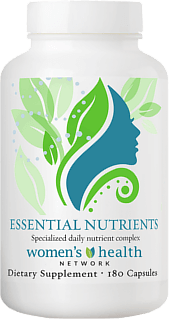
Essential Nutrients
The foundation
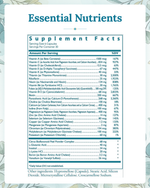
Thirty nutrients in forms your body can actually use. This is the base every Peri/Meno BioType™ bundle starts from, because a targeted formula can't do much on top of a deficient foundation.
There are many reasons almost all women need a multi-vitamin/mineral in today’s world. Industrial food has lower nutritional value; most diets are unbalanced; stress, toxins and dysregulation raise radically our need for nutrients, especially antioxidants and metabolic co-factors. Additionally, about 40% of women can't well utilize ordinary folic acid. We use the 5-methyl form, which works for everyone. It costs several times more and that's not easily explained on the label. That’s the kind of science that drives WHN to use the most bioavailable nutrient forms – they matter to your health.
One thing worth knowing for your BioTypein particular. How your body processes and clears estrogen depends on nutrients — B vitamins, magnesium and the sulfur pathways all sit inside that machinery. When a woman is highly reactive to hormonal signals, how efficiently she clears them matters more, not less.
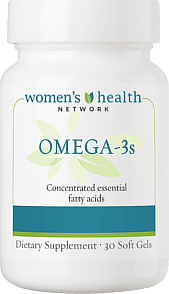
Omega-3s
The inflammation fighter
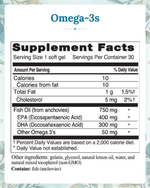
Molecularly distilled from sardines and anchovies, at 400mg EPA and 300mg DHA per serving. This is a cold distillation process that removes all toxins, including heavy metals (think: mercury) without disrupting the beneficial molecular structures. It’s more expensive, of course, but essential.
Insulin dysregulation and inflammation travel together — each makes the other worse. Omega-3s are the best-established nutritional tool for the inflammation side, and they matter for your heart and brain at the same time.
This is the one where the evidence isn't mainly about the pill. It's decades of population data showing that people with higher omega-3 levels have better outcomes — and a daily amount large enough to change where you sit.
How we build these formulas
Most supplements are designed to support marketing claims at the lowest cost. More of this, higher dose, put it on the front of the label.
We build differently, and we'll tell you exactly how. Every ingredient in a WHN formula has to earn its place in one of five ways: it's there at a dose with evidence behind it; it contributes to a shared pathway that collectively reaches a meaningful amount; it's a cofactor your biochemistry genuinely needs; there's population evidence tying it to health outcomes and our dose moves your level; or it works by its own route, giving your body another option.
What we won't tell you is that this combination does something magical that its parts don't. "Synergy" is an overused word in this business and it usually means nobody connected the science to the goal in a realistic way. We'll tell you is what's in it, in what form, and why it's there — and on most of our formulas, exactly how much of each. Where we protect a blend ratio, we say so on that page.
What to expect
This isn't a set of supplements you take instead of doing the work. It's the nutritional support underneath changes you make in your real life.
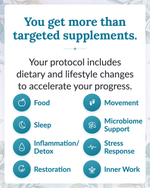
Your BioType protocol covers the rest — what steadies blood sugar through the day, why alcohol and hot flashes travel together, how to protect sleep when night sweats are breaking it, and what actually helps in the fortnight before a period that's still arriving.
Most women give this three cycles before judging it, and that's the right timeframe. If you're still cycling, your symptoms move with your cycle, and one month tells you very little.
We are here to help. At WHN you can talk to an Advisor for free during weekdays in Maine. She'll know what she's talking about, having helped thousands of women before you.
Talk to your doctor
This one matters more than usual. We always advise telling your doctor about any supplement you’re taking. If you have a history of breast cancer, or any hormone-sensitive condition, talk to your doctor before starting this one. The isoflavones and the wild yam in this formula both interact with estrogen receptors.
If you're taking an aromatase inhibitor, this matters especially — and the reason is worth knowing.
Aromatase inhibitors work by stopping your body from making estrogen. They don't stop a plant compound from reaching the estrogen receptor directly. So even though your treatment has lowered your own estrogen, anything that binds those receptors from outside bypasses the protection of your AI. Talk to your oncologist before taking this.
The same applies if you're taking tamoxifen or any hormone therapy.
If you have liver problems, discuss the black cohosh specifically.
And if your bleeding is heavy, prolonged, or happening between periods, that needs looking at rather than managing. It's usually nothing serious and it should still be checked.
None of your protocol replaces medical care. It works alongside it.
These statements have not been evaluated by the Food and Drug Administration. This product is not intended to diagnose, treat, cure or prevent any disease.
Reviews for Peri/Meno BioType™: Hormone-Sensitive Bundle
Includes reviews for the bundle, along with its individual components

Ingredients for Peri/Meno BioType™: Hormone-Sensitive Bundle


